The Clock Tower
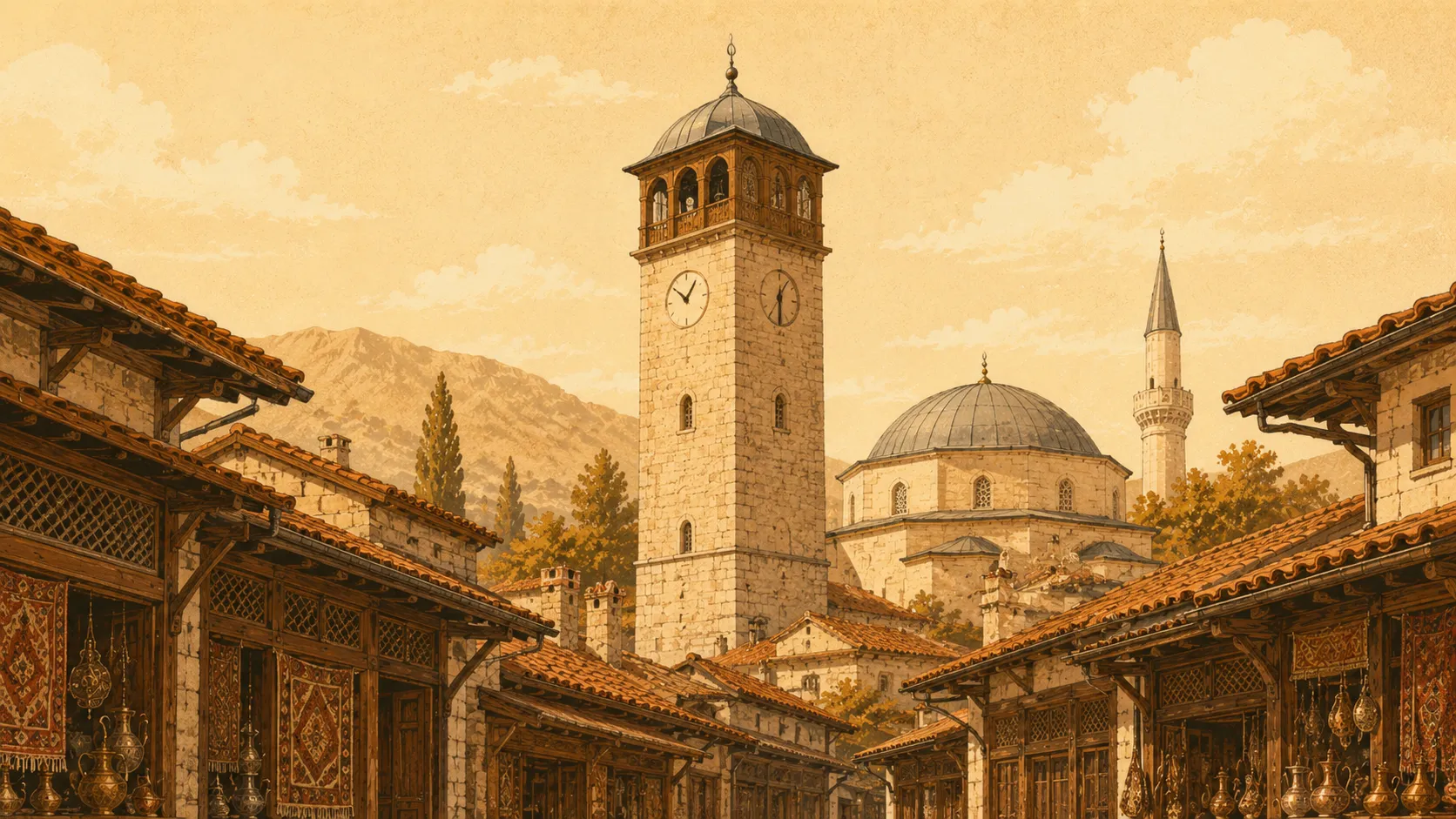
The Ottoman clock tower beside the bazaar — first raised in 1597, robbed of its bell by Montenegrin troops in 1912, lost again in the 1999 war, and rebuilt from old photographs.
A bazaar runs on time, and for centuries Gjakova kept its time from a tower. The Clock Tower — Sahat Kulla — stands a few steps from the Hadum Mosque, on a spot the old town still calls Fusha e Sahatit, the Field of the Clock. The tower you see is young; the role it plays is very old.
On the Field of the Clock
The first clock tower went up in 1597, just after the mosque, in the years the bazaar was finding its feet. It was a working instrument as much as an ornament: face and bell opened the merchants’ day, framed the hours of prayer, and signalled the closing of the stalls. Built of stone and topped with a wooden belfry under a lead roof, it gave a flat town a vertical landmark you could find from any lane.
A bell carried to Montenegro
Its first wound came with the Balkan Wars. In 1912, as Montenegrin forces took Gjakova and the bazaar burned, the tower’s bell and clockwork were carried off to Montenegro and never came back. The clock fell silent, and the town was left with a tower that no longer kept its time.
Destroyed, and turned back
What remained did not survive the next war. The tower was destroyed in 1999, along with the çarshia around it. When Kosovo set about rebuilding, the clock tower was raised once more — reconstructed from old photographs in the city archive, near the centenary of the 1912 raid that had first robbed it. Sources differ on the exact year of the work, somewhere from the mid-2000s into the early 2010s, and the new tower is frankly modern in its making. But the silhouette is faithful, and Gjakova has its skyline back.
What to look for
Today’s tower stands about thirty metres, stone below and a lead-capped wooden belfry above, keeping company with the mosque and the Ethnographic Museum at the head of the bazaar. The clock has been temperamental since its return — often stopped, occasionally corrected — which feels, somehow, fitting. A tower that lost its bell to one war and its body to another has perhaps earned the right to keep time loosely.
Gallery
Image credits
- The Clock Tower above the river.@andreasson.photo
Related places
The Grand Bazaar
16th century
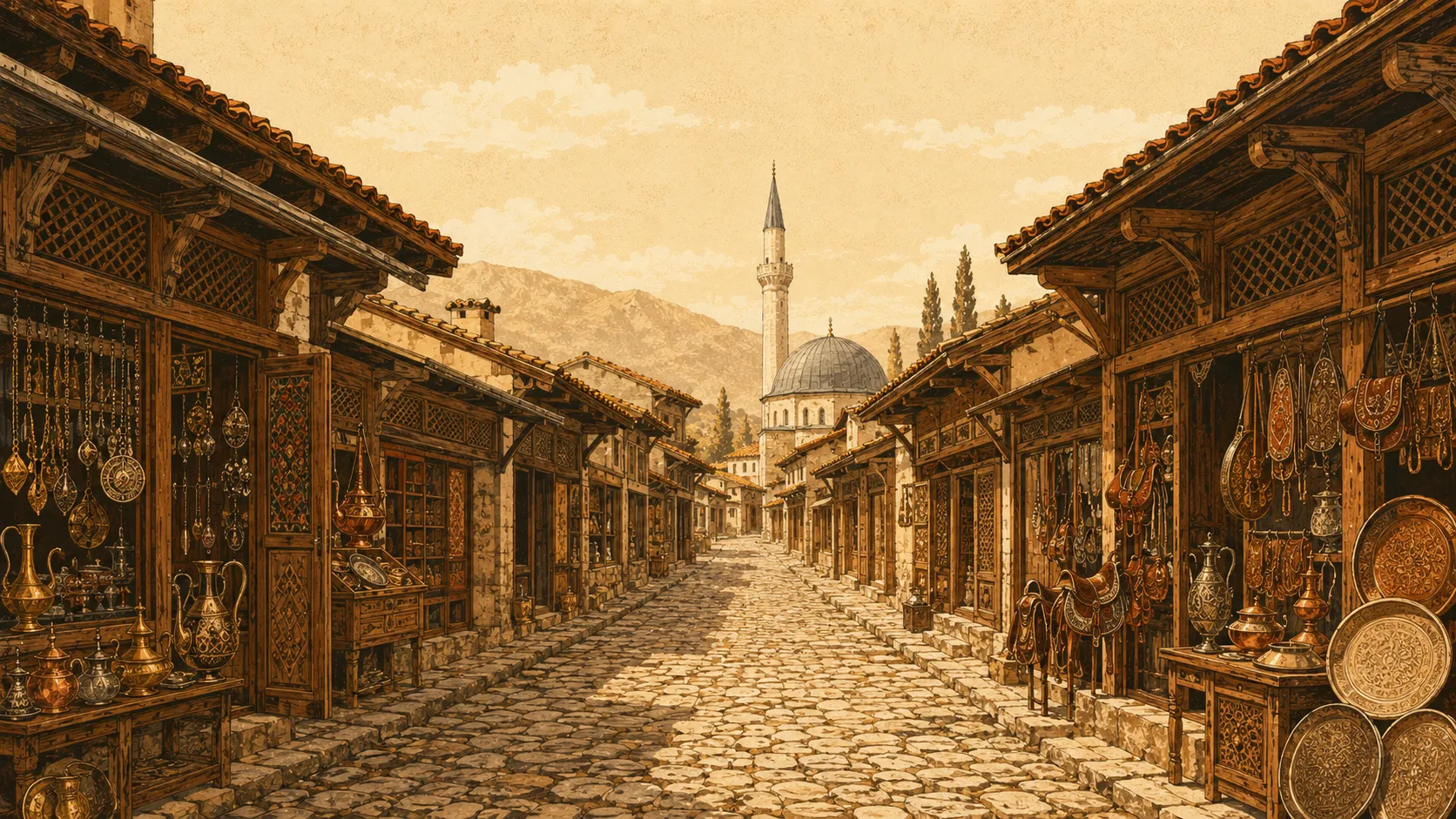
The beating heart of old Gjakova — a kilometre of cobbled lanes lined with craftsmen's shops, the oldest and longest bazaar in Kosovo, burned in 1999 and rebuilt shop by shop.
Read the guide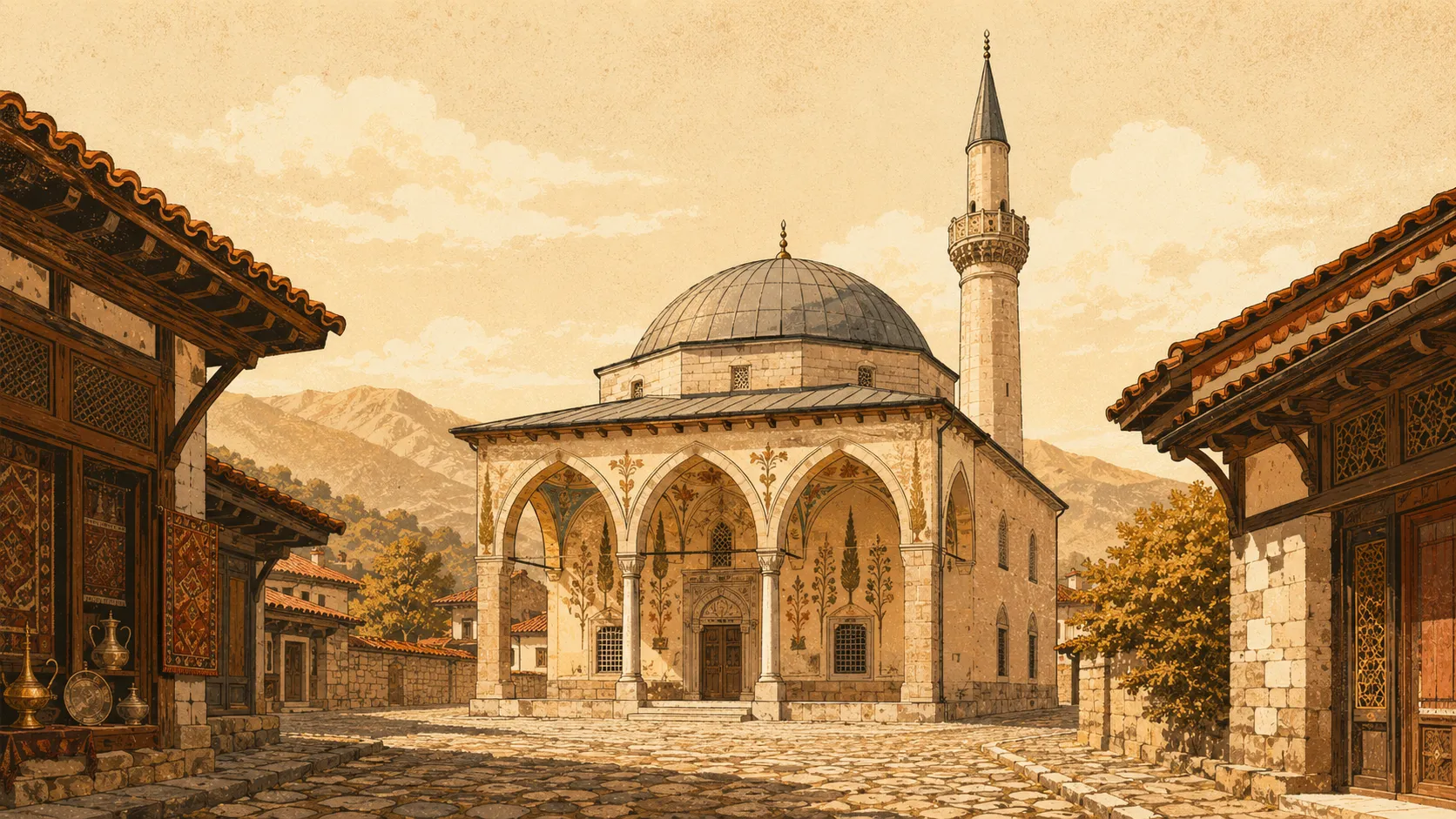
The Hadum Mosque
c. 1594
The late-Ottoman mosque at the head of the bazaar — its interior a painted garden of cypresses and flowers, and the endowment from which the whole old city grew.
Read the guide